About
A Mumbai cardiologist who also ships software
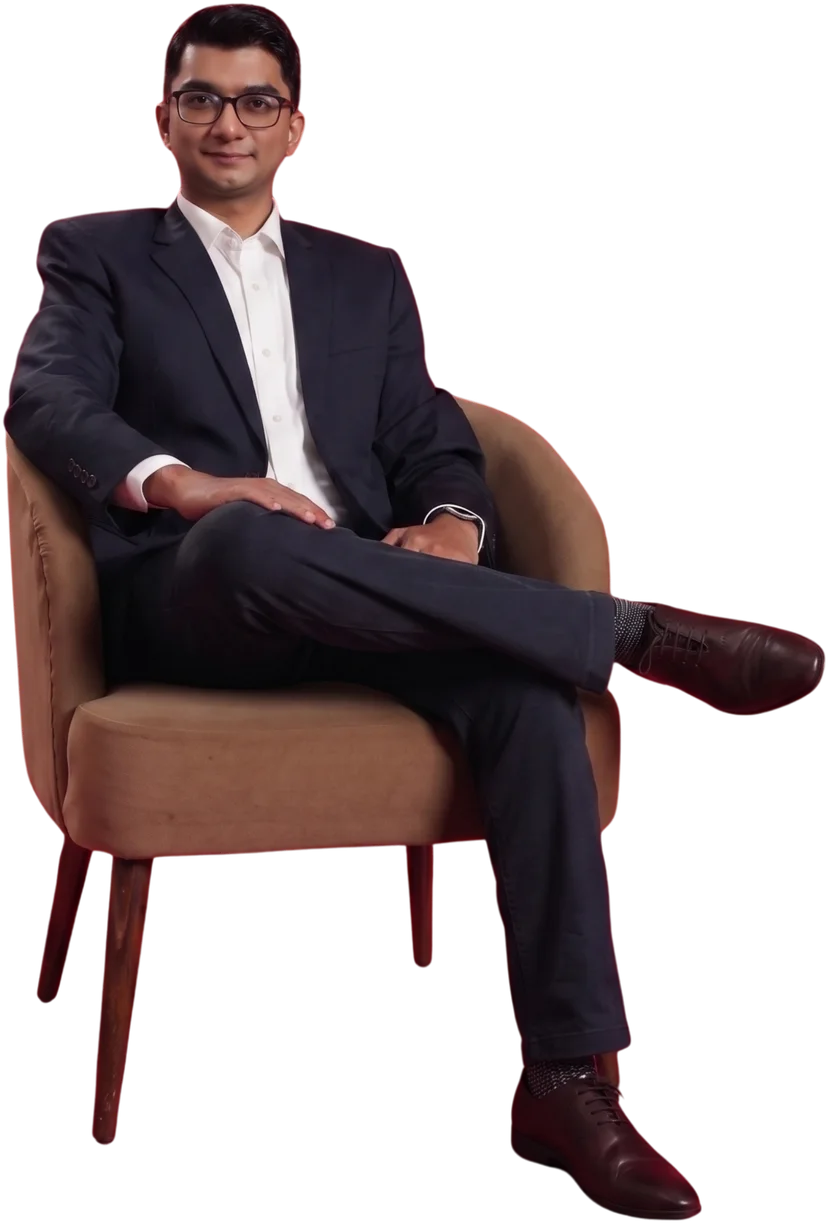
I'm Dr Kunal Ajay Patankar — MBBS, MD (General Medicine), DrNB (Cardiology) — an interventional cardiologist and structural heart specialist practising at Heart and Vascular SuperSpeciality Hospitals.
My clinical world spans the full breadth of modern cardiology: coronary angiography and complex angioplasty, intravascular imaging with OCT and IVUS, structural procedures like TAVR, mitral edge-to-edge repair, balloon mitral valvotomy and ASD device closure, cardiac devices from pacemakers to CRT-D — and the long game of heart failure care and cardiac rehabilitation.
My second world is code. Working inside hospitals, I kept meeting the same enemy: friction. Registries in spreadsheets, protocols in memory, reports typed at midnight. So I started building the tools I wished existed — five of them so far, from a TAVI programme governance system to a WhatsApp-based medical AI assistant.
When neither world needs me, I head for the mountains — more on that below.
The journey
Training, in full
Every date — including the ones that don't run consecutively.
2009 – 2015
MBBS
Grant Government Medical College & Sir J.J. Group of Hospitals, Mumbai
Undergraduate medicine in a large public hospital in central Mumbai — learned on open wards, at volume, long before it was learned from a book.
2015 – 2016
Government service bond
The compulsory year of state service that follows an MBBS from a government medical college, served at the Employees' State Insurance Corporation (ESIC), Mumbai. Completed in full.
2016 – 2018
Two years between degrees
I stepped away from clinical medicine, taught myself to build software, and kept sitting the postgraduate entrance exam until the seat came.
What happened in those two yearsCloseThe honest version is that I was not sure I wanted to stay in medicine.
When the bond ended in 2016 I went towards computers instead. I taught myself to code, built my first apps, and spent that time pulling apart the software people use every day to work out why the good ones ask so little of you. That is where the word friction entered my vocabulary: a product earns its place by removing a specific piece of it from someone's day, and very little else about a product matters as much.
It did not stay theoretical for long. I registered a trademark and formed a company, put a personalised orthodontic toothpaste on the market, and ran a small music label that is still on Spotify. I also learned to deploy what I built rather than only write it — the servers, the queues, the bill at the end of the month.
None of that was medicine, and none of it was a plan to come back to medicine better equipped. It is what those two years contained.
Alongside that, I kept sitting the postgraduate entrance exam. I sat it more than once. The MD Medicine seat did not come until 2018. So one part of those two years was a decision, and the other part was waiting — and being turned down, and going back to the exam.
Nothing after that was interrupted. MD in 2018, finished in 2021, then DrNB Cardiology.
I don't count those two years as lost, and I wouldn't want them dressed up either. They are where the other half of this website comes from. The five products all started from a habit formed then — watch where a process wastes a person's attention, then rebuild the process. It is the same question I ask in the cath lab, where can this be done is rarely the hard part, and what is the cleanest way to do it, and what does it cost the patient always is.
2018 – 2021
MD (General Medicine)
N.K.P. Salve Institute of Medical Sciences & Research Centre and Lata Mangeshkar Hospital, Nagpur
Three years of general medicine — wards, ICU, emergencies, and a dissertation on cerebral venous thrombosis. Good cardiology starts with good internal medicine; this is where that comes from.
2022 – 2025
DrNB (Cardiology)
P. D. Hinduja National Hospital and Medical Research Centre, Mumbai
Cardiology training at a tertiary referral centre — CCU, echocardiography, and the first wires and balloons of interventional practice.
Today
Interventional & structural practice
Heart and Vascular SuperSpeciality Hospitals
Complex angioplasty, imaging-guided PCI, TAVR and structural heart interventions — alongside the software.
How I practise
Four rules I don't break
01
Imaging first
If OCT or IVUS can make a stent more precise, it belongs in the case. Guesswork is not a technique.
02
Explain like family
Every patient hears the same explanation my own family would get — plain words, honest numbers, real options.
03
Fix the system too
When a workflow wastes clinician time, I don't just complain — I write software that fixes it.
04
Skin in the game
I recommend what the evidence supports and what I would choose for myself. Nothing else.
Want the formal version? Speaker profile & media kit →
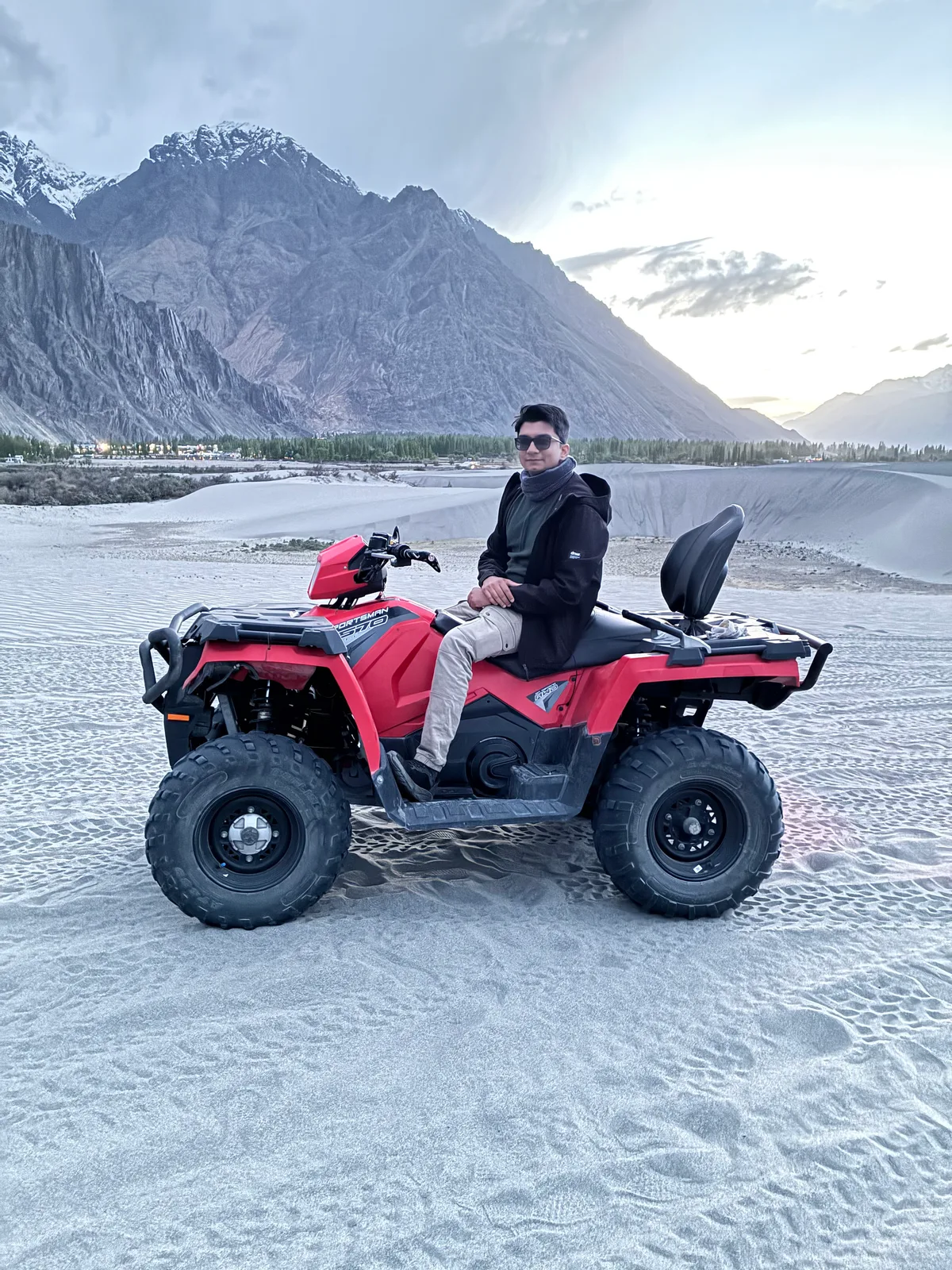
Nubra Valley, Ladakh
Off duty
I live beside the sea.
I recover in the mountains.
Mumbai gives me the ocean every day. So when I need to reset, I go where the horizon stands up — the Himalayas. Nothing recalibrates a person like a mountain: it is the most honest teacher of humility I know, and I come back from every trip more grounded than I left.
It's the same thing I tell every cardiac rehabilitation patient: the heart refills between beats, not during them. Rest isn't the absence of work — it's a discipline. The mountains are where I practise it, and where the clearest thinking about medicine — and more than one software idea — has come from.
The rest of it is ordinary. I play team sports, badly and often — never the kind you win alone. I travel with my wife and try whatever a place happens to offer; if there is something to climb, ride or jump off, I will have signed up before I have thought about it. And I watch animated films, which I am told is an odd habit for a grown cardiologist. I spend my days explaining risk; they are the only films that assume, without arguing about it, that things can turn out well.
Your heart deserves a plan.
Book a consultation — in person at HVS Hospitals, Mumbai, or start with the appointment widget right here.